
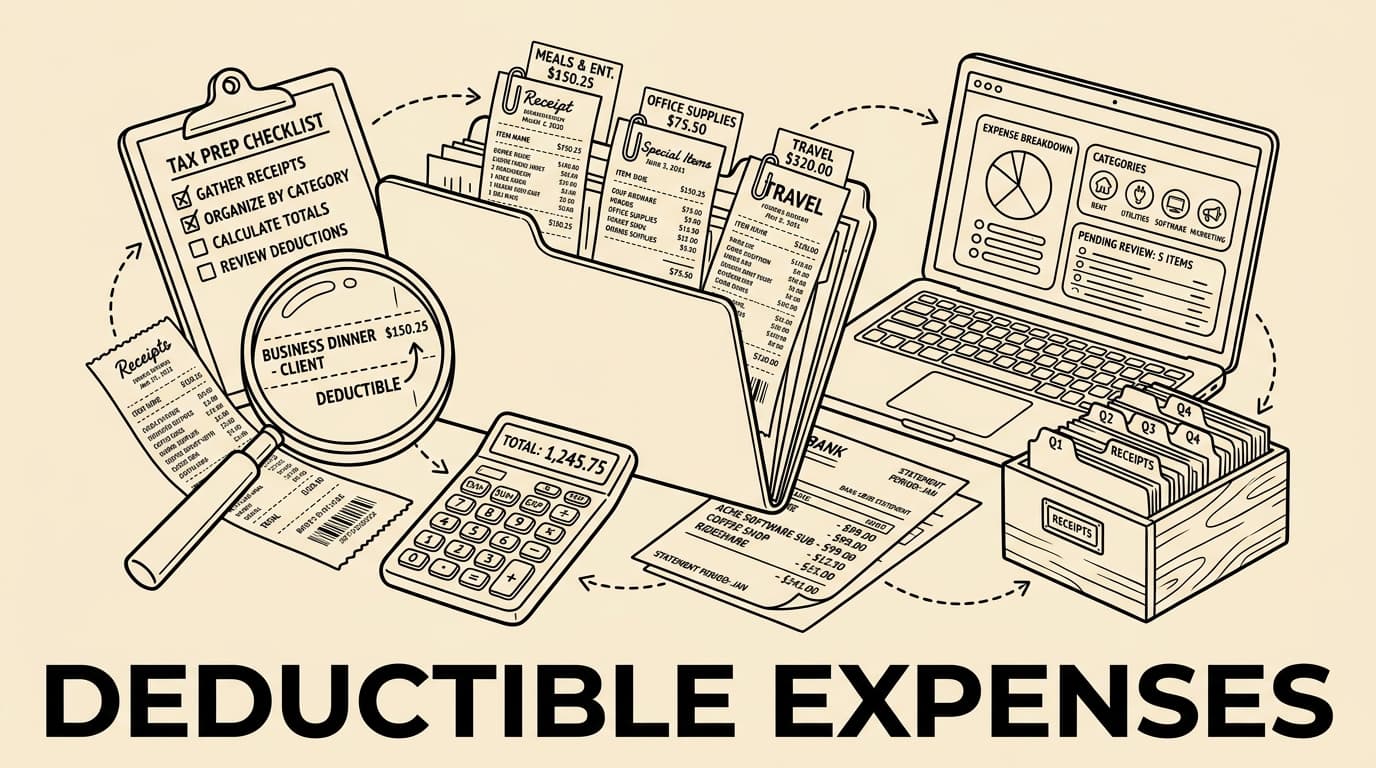
Tax-deductible business expense categories are not just a tax-season checklist. They are a practical operating structure for understanding how money leaves the company, what evidence supports each transaction, and which costs belong in management reports. The safest approach is to build categories that are specific enough for tax and accounting review but simple enough for employees to use every week. This guide explains common deductible categories, the documents to keep, the edge cases to watch, and a workflow that helps small teams avoid messy year-end cleanup.
The basic test for deductibility
A category is useful only when it explains the business purpose, the evidence, and the accounting treatment. For the basic test for deductibility, record the supplier, date, amount, currency, payment method, project or customer, approver, and the reason the cost helped the business earn, protect, or administer income. Do not rely on a card statement alone when a receipt or invoice should exist. If part of the cost is private, split it before export and write a short note that another person can understand in two years. Rules vary by country, but the same principle usually applies: the expense should be business-related, properly evidenced, and separated from private use. For mixed-use costs, keep a reasonable split and document how it was calculated.
Office, software and communication costs
A category is useful only when it explains the business purpose, the evidence, and the accounting treatment. For office, software and communication costs, record the supplier, date, amount, currency, payment method, project or customer, approver, and the reason the cost helped the business earn, protect, or administer income. Do not rely on a card statement alone when a receipt or invoice should exist. If part of the cost is private, split it before export and write a short note that another person can understand in two years. Rules vary by country, but the same principle usually applies: the expense should be business-related, properly evidenced, and separated from private use. For mixed-use costs, keep a reasonable split and document how it was calculated.
- Office, software and communication costs
- Rules vary by country, but the same principle usually applies: the expense should be business-related, properly evidenced, and separated from private use. For mixed-use costs, keep a reasonable split and document how it was calculated.
- Tools like Bill.Dock help capture receipts, extract amounts and dates, assign categories, and keep an audit trail for accountants.
Travel, mileage and accommodation
A category is useful only when it explains the business purpose, the evidence, and the accounting treatment. For travel, mileage and accommodation, record the supplier, date, amount, currency, payment method, project or customer, approver, and the reason the cost helped the business earn, protect, or administer income. Do not rely on a card statement alone when a receipt or invoice should exist. If part of the cost is private, split it before export and write a short note that another person can understand in two years. Rules vary by country, but the same principle usually applies: the expense should be business-related, properly evidenced, and separated from private use. For mixed-use costs, keep a reasonable split and document how it was calculated.
Meals, client meetings and representation
A category is useful only when it explains the business purpose, the evidence, and the accounting treatment. For meals, client meetings and representation, record the supplier, date, amount, currency, payment method, project or customer, approver, and the reason the cost helped the business earn, protect, or administer income. Do not rely on a card statement alone when a receipt or invoice should exist. If part of the cost is private, split it before export and write a short note that another person can understand in two years. Rules vary by country, but the same principle usually applies: the expense should be business-related, properly evidenced, and separated from private use. For mixed-use costs, keep a reasonable split and document how it was calculated.
- Meals, client meetings and representation
- Rules vary by country, but the same principle usually applies: the expense should be business-related, properly evidenced, and separated from private use. For mixed-use costs, keep a reasonable split and document how it was calculated.
- Tools like Bill.Dock help capture receipts, extract amounts and dates, assign categories, and keep an audit trail for accountants.
Home office and remote work costs
A category is useful only when it explains the business purpose, the evidence, and the accounting treatment. For home office and remote work costs, record the supplier, date, amount, currency, payment method, project or customer, approver, and the reason the cost helped the business earn, protect, or administer income. Do not rely on a card statement alone when a receipt or invoice should exist. If part of the cost is private, split it before export and write a short note that another person can understand in two years. Rules vary by country, but the same principle usually applies: the expense should be business-related, properly evidenced, and separated from private use. For mixed-use costs, keep a reasonable split and document how it was calculated.
Professional services, insurance and finance fees
A category is useful only when it explains the business purpose, the evidence, and the accounting treatment. For professional services, insurance and finance fees, record the supplier, date, amount, currency, payment method, project or customer, approver, and the reason the cost helped the business earn, protect, or administer income. Do not rely on a card statement alone when a receipt or invoice should exist. If part of the cost is private, split it before export and write a short note that another person can understand in two years. Rules vary by country, but the same principle usually applies: the expense should be business-related, properly evidenced, and separated from private use. For mixed-use costs, keep a reasonable split and document how it was calculated.
Equipment, depreciation and subscriptions
A category is useful only when it explains the business purpose, the evidence, and the accounting treatment. For equipment, depreciation and subscriptions, record the supplier, date, amount, currency, payment method, project or customer, approver, and the reason the cost helped the business earn, protect, or administer income. Do not rely on a card statement alone when a receipt or invoice should exist. If part of the cost is private, split it before export and write a short note that another person can understand in two years. Rules vary by country, but the same principle usually applies: the expense should be business-related, properly evidenced, and separated from private use. For mixed-use costs, keep a reasonable split and document how it was calculated.
VAT or sales-tax evidence
A category is useful only when it explains the business purpose, the evidence, and the accounting treatment. For vat or sales-tax evidence, record the supplier, date, amount, currency, payment method, project or customer, approver, and the reason the cost helped the business earn, protect, or administer income. Do not rely on a card statement alone when a receipt or invoice should exist. If part of the cost is private, split it before export and write a short note that another person can understand in two years. Rules vary by country, but the same principle usually applies: the expense should be business-related, properly evidenced, and separated from private use. For mixed-use costs, keep a reasonable split and document how it was calculated.
- VAT or sales-tax evidence
- Rules vary by country, but the same principle usually applies: the expense should be business-related, properly evidenced, and separated from private use. For mixed-use costs, keep a reasonable split and document how it was calculated.
- Tools like Bill.Dock help capture receipts, extract amounts and dates, assign categories, and keep an audit trail for accountants.
Mixed-use costs and owner spending
A category is useful only when it explains the business purpose, the evidence, and the accounting treatment. For mixed-use costs and owner spending, record the supplier, date, amount, currency, payment method, project or customer, approver, and the reason the cost helped the business earn, protect, or administer income. Do not rely on a card statement alone when a receipt or invoice should exist. If part of the cost is private, split it before export and write a short note that another person can understand in two years. Rules vary by country, but the same principle usually applies: the expense should be business-related, properly evidenced, and separated from private use. For mixed-use costs, keep a reasonable split and document how it was calculated.
Monthly workflow for clean records
A category is useful only when it explains the business purpose, the evidence, and the accounting treatment. For monthly workflow for clean records, record the supplier, date, amount, currency, payment method, project or customer, approver, and the reason the cost helped the business earn, protect, or administer income. Do not rely on a card statement alone when a receipt or invoice should exist. If part of the cost is private, split it before export and write a short note that another person can understand in two years. Rules vary by country, but the same principle usually applies: the expense should be business-related, properly evidenced, and separated from private use. For mixed-use costs, keep a reasonable split and document how it was calculated.
Category checklist
| Category | Evidence | Review note |
|---|---|---|
| Software and subscriptions | Invoice, renewal terms, user or team purpose | Check duplicate tools and private plans |
| Travel and mileage | Receipt, itinerary, business reason, mileage log | Separate commuting and private extensions |
| Meals and meetings | Receipt, participants, topic, customer or project | Apply local deductibility limits |
| Equipment | Invoice, asset owner, purchase date | Review capitalization or depreciation rules |
Tools like Bill.Dock help capture receipts, extract amounts and dates, assign categories, and keep an audit trail for accountants.
FAQ
Which business expense categories are usually deductible?
Common categories include office costs, software, travel, professional services, insurance, bank fees, marketing, training, and equipment, provided the expense is business-related and evidenced.
Is every receipt tax deductible?
No. A receipt proves spending, but deductibility depends on business purpose, local rules, and whether private use or special limits apply.
How should mixed-use costs be handled?
Split business and private portions using a consistent, reasonable method, and keep a note explaining the calculation.
What is the safest monthly routine?
Capture receipts immediately, categorise weekly, review exceptions, reconcile monthly, and export a clean package to the accountant.
Operational review notes
A useful expense workflow has clear ownership. Employees should know which receipt formats are accepted, which categories need approval, and where to add context. Finance should review exceptions while the transaction is still fresh, not weeks later when the business reason is harder to reconstruct.
Categories also become better when they are connected to payment data. A card feed can show the amount and merchant, while the receipt explains tax details and business purpose. Matching both sources reduces manual review and makes missing documents visible before the month is closed.
Keep the category list short enough for everyday use. If every supplier has its own category, employees will guess and reports become noisy. If the list is too broad, accountants must reopen too many transactions. A practical middle ground is to use stable top-level categories plus notes or project fields for detail.
For audits and accountant reviews, consistency is more valuable than clever labels. Use the same rule for similar costs, document exceptions, and preserve the original receipt image next to extracted fields. That makes the record understandable even when the person who submitted the expense is unavailable.
Conclusion
The best expense category system is practical, consistent, and evidence-led. Keep categories simple enough for everyday use, add notes where judgement is needed, and review exceptions before month end. When receipts, approvals, categories, and bank reconciliation stay connected, tax preparation becomes less stressful and management reporting becomes more useful.