
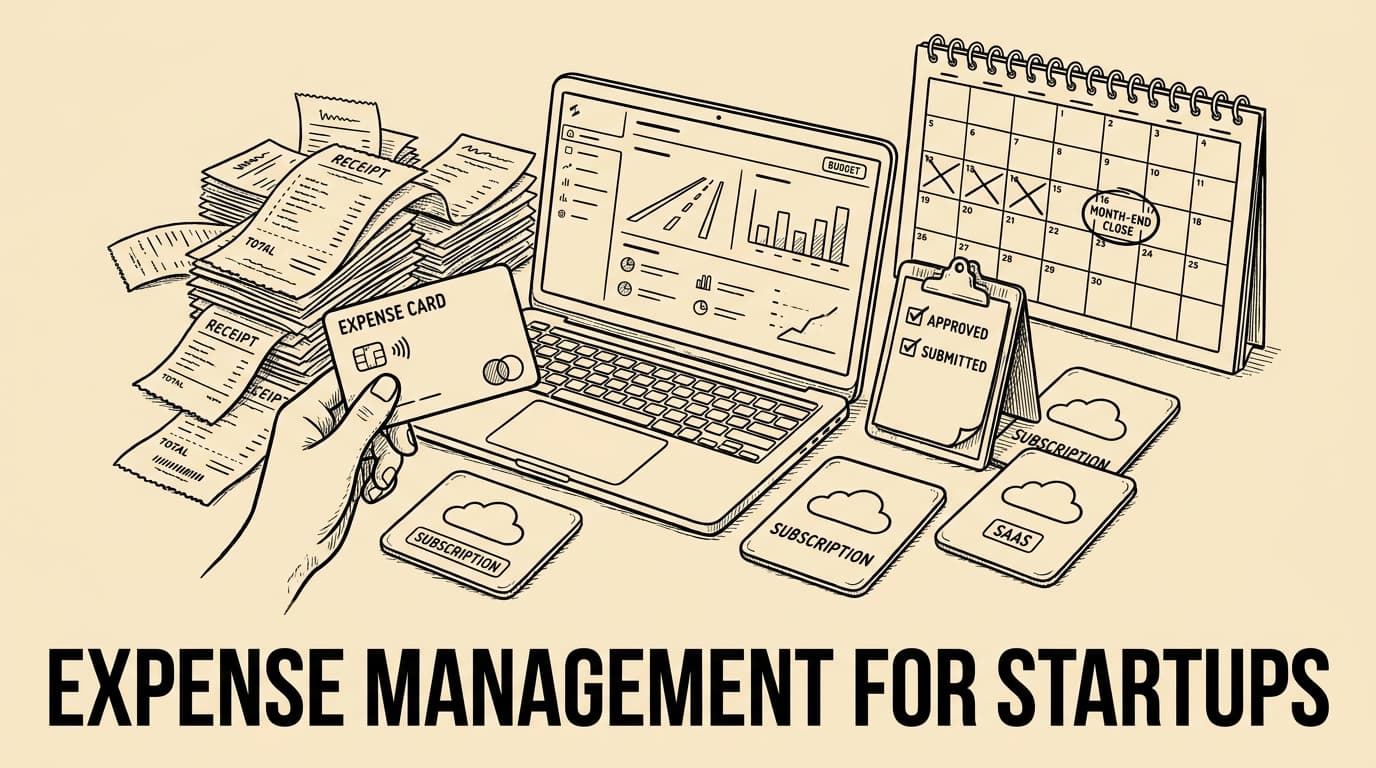
Startup expense management is not about adding enterprise bureaucracy to a small team. It is about making sure every card payment, subscription, travel receipt and reimbursable cost can be explained before cash becomes tight and investors start asking for cleaner numbers. Early teams often begin with shared inboxes, spreadsheets and informal Slack approvals. That can work for a few founders, but it breaks quickly when sales travel, contractors, software tools and remote employees enter the picture. A lightweight process gives people freedom to buy what they need while giving finance a reliable trail for tax, bookkeeping and month-end decisions.
Why startups need an expense process earlier than they think
The first finance system in a startup is usually a mixture of founder cards, employee reimbursements and accounting exports. The risk is not that one receipt is missing; the risk is that nobody can see total spend by project, vendor or customer initiative until the bank account has already changed. A small policy turns scattered purchases into data that can be reviewed every week.
A good startup process should answer simple questions: who may spend, which categories need approval, what proof is required, and when employees will be reimbursed. These questions are operational, not theoretical. When they are written down, new joiners do not need to copy habits from the loudest person in the company, and finance can challenge unusual costs without making it personal.
The process also protects speed. If every purchase requires a founder to interpret a vague rule, urgent work slows down. If routine software, travel and client costs have thresholds, the team can move independently and escalate only exceptions.
- Define spending owners for cards, subscriptions, travel and team events.
- Use a simple threshold model: allowed, manager approval, finance review.
- Keep policy wording short enough that employees actually read it.
Set categories that match how the company manages cash
Many young companies copy a chart of accounts from an accounting template and then wonder why expense reviews feel abstract. Categories should be useful for decision-making: software, cloud infrastructure, customer acquisition, travel, office equipment, professional services and employee reimbursements. The accounting system can remain more detailed, but the operational view should help leadership see what changed this month.
For international startups, add local tax fields only where they matter. VAT, sales tax and deductible expense rules differ by country, so the expense workflow should capture invoice details and business purpose without pretending that one rule covers every jurisdiction. Local accountants can then apply the correct treatment from reliable documents instead of guessing from a card statement.
The practical test is whether the CFO, founder or accountant can open the month-end export and immediately identify avoidable spend, missing receipts and costs that should be charged to a customer or project.
- Use business-purpose notes for travel, meals and client-related purchases.
- Separate recurring subscriptions from one-off purchases.
- Tag project or customer costs when the team needs margin visibility.
Make receipt capture automatic, not heroic
Receipt collection is where startup expense processes often fail. Employees want to move on after a trip or purchase, while finance needs the document later for bookkeeping and tax evidence. The solution is to capture the receipt at the moment of purchase, not two weeks later during the close.
Tools like Bill.Dock support this by turning receipt capture into a repeatable workflow: employees submit documents, finance receives structured information, and missing context can be requested before the transaction is forgotten. The value is less about a shiny app and more about reducing manual chasing.
A receipt rule should be precise: what counts as acceptable proof, which fields must be visible, where the document is uploaded, and how quickly it must be submitted. For card payments, the bank transaction alone is usually not a complete business record; the invoice or receipt explains what was bought and why it belongs in the books.
- Ask for date, vendor, amount, currency and tax details where applicable.
- Require a short business purpose for travel, meals and unusual purchases.
- Review missing receipts weekly instead of waiting for month-end.
Design approvals around risk, not hierarchy
Startups sometimes choose between no approvals and too many approvals. The better approach is risk-based. Low-value, routine purchases within policy should move quickly. Unusual vendors, hardware, travel changes, cash withdrawals and high-value subscriptions deserve a second look because the cost or compliance impact is higher.
Approval rules should also consider who has context. A team lead may know whether a tool is needed, while finance may know whether the invoice contains the right tax details. Splitting those responsibilities avoids turning finance into a blocker and avoids asking managers to interpret bookkeeping requirements.
As the company grows, approval data becomes a useful audit trail. It shows that spend was reviewed, who accepted the business purpose and whether exceptions were documented. That matters during investor diligence, annual accounts and internal reviews.
- Let routine in-policy expenses flow with light review.
- Escalate out-of-policy, high-value or new-vendor costs.
- Store approval decisions with the receipt and transaction record.
Build a month-end checklist from day one
A startup does not need a heavy close calendar, but it does need a repeatable checklist. The checklist should confirm that card transactions are matched to receipts, reimbursements are approved, subscriptions are reviewed, and exports are ready for the accountant. This turns expense management from an ad hoc clean-up into a weekly operating rhythm.
The checklist should be owned by a named person. In the earliest stage that may be a founder or operations lead; later it may move to finance. Ownership matters because expense problems rarely fix themselves. Someone has to chase missing proof, ask for clarification and decide whether an old subscription is still needed.
A short close also improves forecasting. When expenses are coded consistently, the team can compare actual spend with budget and runway assumptions. That supports better hiring, fundraising and pricing decisions without waiting for a quarterly clean-up.
- Match every card transaction to a receipt or invoice.
- Review open reimbursements and payment dates.
- Export clean data for bookkeeping before the month is locked.
Keep the policy human and review it quarterly
The best startup policies are clear enough to be followed and flexible enough to survive growth. They explain the intent behind the rule, give examples and tell employees where to ask questions. They do not attempt to list every possible purchase, because that creates loopholes and constant updates.
A quarterly review is usually enough in an early-stage company. Look at rejected expenses, missing receipt patterns, subscription growth and feedback from employees. If the same exception appears repeatedly, the policy or approval flow may need to change.
This review should be practical rather than punitive. The goal is to remove ambiguity, protect cash and keep finance data clean. When employees understand that, the process feels like support rather than surveillance.
- Refresh thresholds after fundraising, hiring or market expansion.
- Add examples for common grey areas.
- Remove steps that create work without improving control.
Frequently asked questions
What is startup expense management?
It is the set of rules, tools and review routines that help a startup approve spend, collect receipts, reimburse employees and prepare clean bookkeeping records.
When should a startup introduce an expense policy?
A simple policy is useful as soon as more than founders are spending company money. It can start as one page and become more detailed as the team grows.
Do startups need expense management software?
Very early teams can begin manually, but software becomes helpful when receipt chasing, card reconciliation and multi-person approvals start taking too much time.
How strict should approvals be?
Approvals should match risk. Routine purchases within policy need light review, while high-value, unusual or out-of-policy spend should be escalated.
How Bill.Dock helps
Bill.Dock helps startups capture receipts, organise expense evidence and keep finance workflows consistent without forcing a heavy enterprise process on a small team.
Conclusion
Expense management for startups works best when it is simple, visible and reviewed regularly. Start with categories, receipt capture, risk-based approvals and a short close checklist. Those habits protect cash today and create the clean records that investors, accountants and leadership will expect tomorrow.
Operating rhythm for the first 90 days
In the first month, document the policy, connect card feeds and agree who reviews exceptions. In the second month, compare submitted receipts with bank transactions every week and remove categories nobody uses. In the third month, review subscription owners, reimbursement timing and the quality of exports sent to bookkeeping. This rhythm gives the startup enough evidence for decisions without turning expense management into a separate project.
The most useful review is short and consistent. Look at missing receipts, purchases approved after the fact, subscriptions without an owner and expenses that appear in the wrong project. Each finding should lead to one small improvement: clearer wording, a better category, a reminder rule or a threshold change.
Founders should also keep a visible exception log. The log does not need sensitive detail; it simply records why an unusual cost was allowed, who approved it and whether the policy should change. Over time, this becomes a useful learning loop for hiring, travel and software spend.