
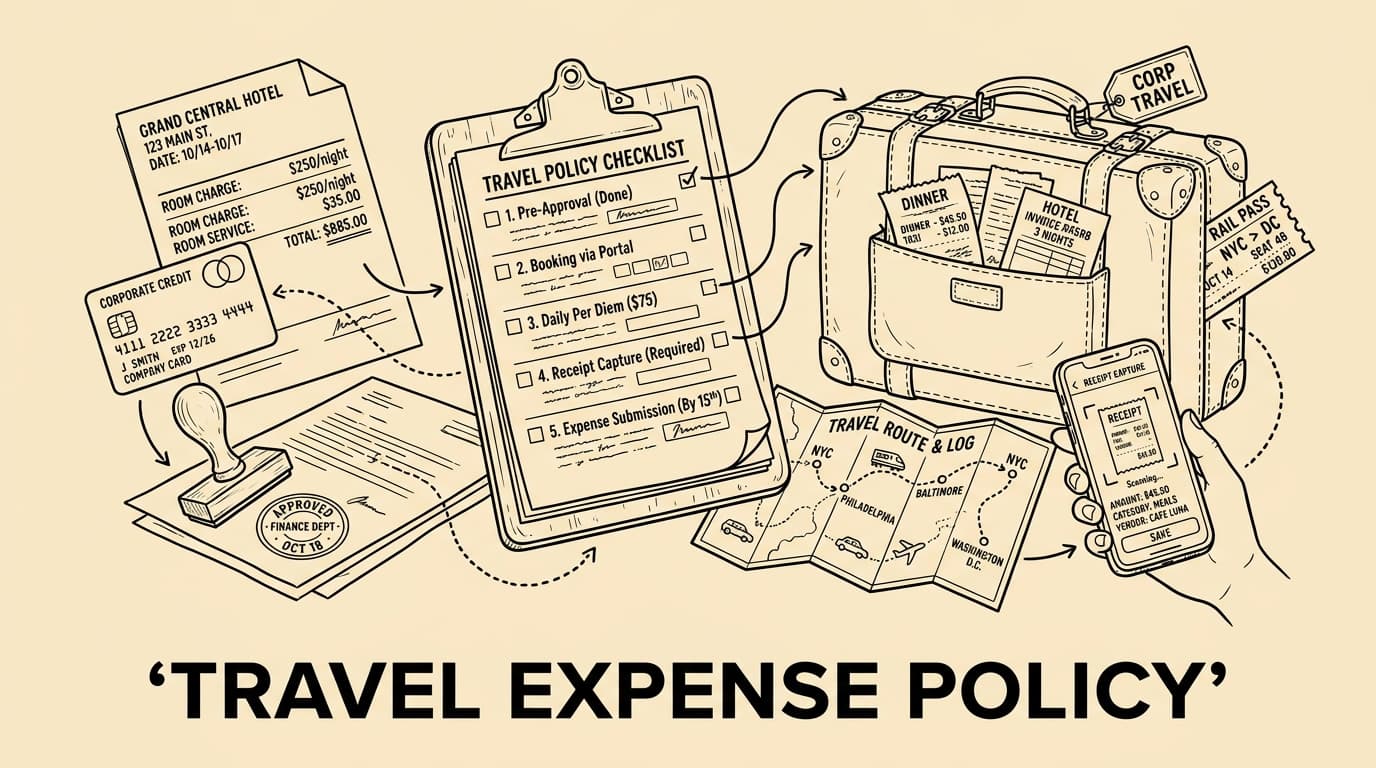
A travel expense policy template is useful because travel creates the most variable spending in many organisations. Flights, trains, hotels, taxis, meals, roaming, parking, tips and client hospitality all happen away from the office and often under time pressure. A good policy turns those decisions into a simple framework before the trip starts. The policy should not read like a punishment manual. It should explain the business reason behind each rule: budgets need predictability, employees need fast reimbursement, accountants need evidence, and managers need a fair way to approve exceptions. If those goals are clear, compliance becomes easier.
Who the policy applies to
A travel expense policy template is useful because travel creates the most variable spending in many organisations. Flights, trains, hotels, taxis, meals, roaming, parking, tips and client hospitality all happen away from the office and often under time pressure. A good policy turns those decisions into a simple framework before the trip starts.
Start with ownership. Finance defines the policy, managers approve business need, employees submit complete evidence, and leadership decides which exceptions are acceptable. This avoids the common problem where nobody knows whether an unusual hotel, upgrade or late taxi is allowed. Use GBP, EUR, USD and local tax rules consistently when employees travel across borders. VAT invoices, hotel folios and card statements should remain connected to the trip record.
Booking and pre-approval rules
The policy should not read like a punishment manual. It should explain the business reason behind each rule: budgets need predictability, employees need fast reimbursement, accountants need evidence, and managers need a fair way to approve exceptions. If those goals are clear, compliance becomes easier.
Define spend limits by category and by context. A client-facing trip to London is different from an internal workshop in a regional town. The policy can set normal limits, require pre-approval above a threshold, and allow higher budgets for trade fairs or last-minute travel. Use GBP, EUR, USD and local tax rules consistently when employees travel across borders. VAT invoices, hotel folios and card statements should remain connected to the trip record.
- travel booking, receipt, per diem
- Tools like Bill.Dock help finance teams collect receipts, route approvals and export clean travel expense records without chasing travellers by email.
- Use GBP, EUR, USD and local tax rules consistently when employees travel across borders. VAT invoices, hotel folios and card statements should remain connected to the trip record.
Transport, mileage and taxis
Start with ownership. Finance defines the policy, managers approve business need, employees submit complete evidence, and leadership decides which exceptions are acceptable. This avoids the common problem where nobody knows whether an unusual hotel, upgrade or late taxi is allowed.
Receipt rules deserve special attention. A card transaction alone rarely proves the business purpose or tax details. Employees should attach itemised receipts, invoice numbers where available, attendee names for meals, trip purpose, project code and the date of travel. Use GBP, EUR, USD and local tax rules consistently when employees travel across borders. VAT invoices, hotel folios and card statements should remain connected to the trip record.
Hotels and overnight limits
Define spend limits by category and by context. A client-facing trip to London is different from an internal workshop in a regional town. The policy can set normal limits, require pre-approval above a threshold, and allow higher budgets for trade fairs or last-minute travel.
Mileage and private car use should be specific. State when a private car is allowed, which rate applies, how routes are documented, and whether parking, tolls or charging costs are reimbursable. This prevents inconsistent treatment between employees. Use GBP, EUR, USD and local tax rules consistently when employees travel across borders. VAT invoices, hotel folios and card statements should remain connected to the trip record.
Meals, per diems and hospitality
Receipt rules deserve special attention. A card transaction alone rarely proves the business purpose or tax details. Employees should attach itemised receipts, invoice numbers where available, attendee names for meals, trip purpose, project code and the date of travel.
Corporate cards make travel easier, but they do not remove the need for policy. Cardholders still need deadlines, missing receipt rules, prohibited merchants, cash withdrawal guidance and a process for personal charges paid accidentally with the company card. Use GBP, EUR, USD and local tax rules consistently when employees travel across borders. VAT invoices, hotel folios and card statements should remain connected to the trip record.
- per diem, mileage, corporate card, manager approval
- Tools like Bill.Dock help finance teams collect receipts, route approvals and export clean travel expense records without chasing travellers by email.
- Use GBP, EUR, USD and local tax rules consistently when employees travel across borders. VAT invoices, hotel folios and card statements should remain connected to the trip record.
Receipts and tax evidence
Mileage and private car use should be specific. State when a private car is allowed, which rate applies, how routes are documented, and whether parking, tolls or charging costs are reimbursable. This prevents inconsistent treatment between employees.
The approval flow should be short and visible. Pre-trip approval checks business purpose and rough budget. Post-trip approval checks evidence and policy compliance. Finance then reconciles the claim against card or bank data and exports it to accounting. Use GBP, EUR, USD and local tax rules consistently when employees travel across borders. VAT invoices, hotel folios and card statements should remain connected to the trip record.
Corporate cards and cash advances
Corporate cards make travel easier, but they do not remove the need for policy. Cardholders still need deadlines, missing receipt rules, prohibited merchants, cash withdrawal guidance and a process for personal charges paid accidentally with the company card.
Build exception handling into the template. Travel is unpredictable: cancelled flights, safety issues, unavailable hotels and client requests happen. The policy should say who can approve exceptions, what note is required and how quickly the decision must be recorded. Use GBP, EUR, USD and local tax rules consistently when employees travel across borders. VAT invoices, hotel folios and card statements should remain connected to the trip record.
Approval workflow and exceptions
The approval flow should be short and visible. Pre-trip approval checks business purpose and rough budget. Post-trip approval checks evidence and policy compliance. Finance then reconciles the claim against card or bank data and exports it to accounting.
Finally, make the policy easy to use. A one-page summary, examples of allowed and not allowed costs, a mobile receipt process and monthly reporting will do more for compliance than a long PDF that nobody reads. Use GBP, EUR, USD and local tax rules consistently when employees travel across borders. VAT invoices, hotel folios and card statements should remain connected to the trip record.
Reimbursement timeline
Build exception handling into the template. Travel is unpredictable: cancelled flights, safety issues, unavailable hotels and client requests happen. The policy should say who can approve exceptions, what note is required and how quickly the decision must be recorded.
A travel expense policy template is useful because travel creates the most variable spending in many organisations. Flights, trains, hotels, taxis, meals, roaming, parking, tips and client hospitality all happen away from the office and often under time pressure. A good policy turns those decisions into a simple framework before the trip starts. Use GBP, EUR, USD and local tax rules consistently when employees travel across borders. VAT invoices, hotel folios and card statements should remain connected to the trip record.
- VAT invoice, reimbursement
- Tools like Bill.Dock help finance teams collect receipts, route approvals and export clean travel expense records without chasing travellers by email.
- Use GBP, EUR, USD and local tax rules consistently when employees travel across borders. VAT invoices, hotel folios and card statements should remain connected to the trip record.
Implementation checklist
Finally, make the policy easy to use. A one-page summary, examples of allowed and not allowed costs, a mobile receipt process and monthly reporting will do more for compliance than a long PDF that nobody reads.
The policy should not read like a punishment manual. It should explain the business reason behind each rule: budgets need predictability, employees need fast reimbursement, accountants need evidence, and managers need a fair way to approve exceptions. If those goals are clear, compliance becomes easier. Use GBP, EUR, USD and local tax rules consistently when employees travel across borders. VAT invoices, hotel folios and card statements should remain connected to the trip record.
Policy table
| Rule area | Decision | Evidence |
|---|---|---|
| Pre-approval | Manager before booking | Purpose, date, expected cost |
| Receipt capture | Employee within deadline | Itemised receipt or invoice |
| Exception | Named approver | Short note and reason |
| Reimbursement | Finance after review | Approved claim and payment record |
FAQ
What is a travel expense policy?
It is a written rulebook that explains which business travel costs are allowed, which evidence is required, who approves spending and when employees are reimbursed.
Should small companies use per diems?
Per diems can simplify meals and incidental costs, but they must match local rules and should be documented in the policy.
How strict should receipt rules be?
Strict enough to satisfy tax and audit requirements, but practical enough that travellers can comply from a phone while they are on the road.
Can a template replace legal advice?
No. A template gives structure; local tax, employment and labour rules should be checked with an accountant or advisor.
Conclusion
A travel expense policy works best when it is clear, short and operational. Define the rules before employees travel, collect evidence while the trip is fresh, approve exceptions visibly and review patterns every month. That gives finance cleaner books and gives travellers a fair, predictable process.