
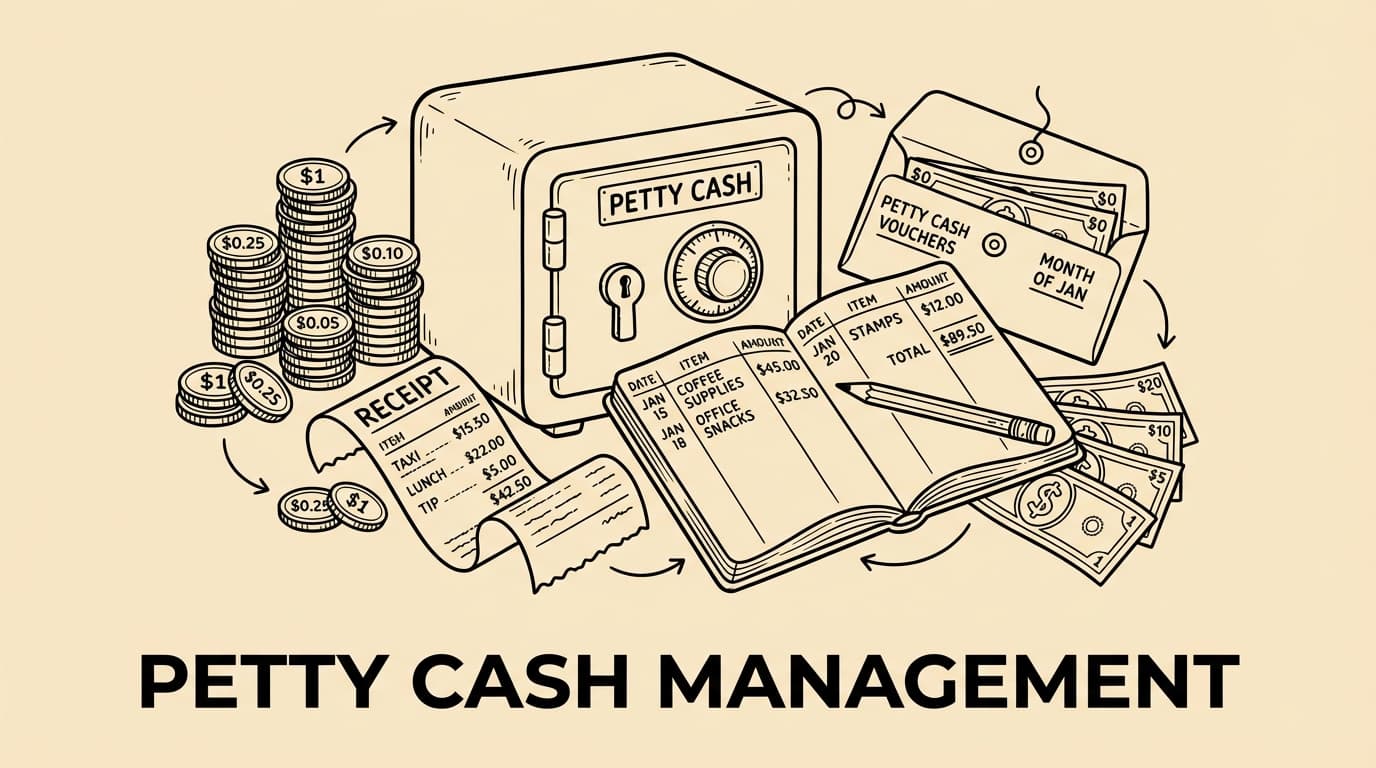
En småkasse er liten av natur, men uten styring kan den skape mye regnskapsarbeid. En manglende kvittering, uklar begrunnelse eller sen påfylling blir fort et problem ved månedsavslutning. God håndtering handler ikke om å forby kontanter, men om å dokumentere nødvendige småkjøp.
Definer omfang og eierskap
Modern finance teams move many expenses to cards, invoices or reimbursement apps, yet småkasse still appears at sites, events, workshops and travel days. The policy should say when cash is acceptable, who holds the kasse, which kvittering is required and how the balance is checked. I Norge bør småkassen tilpasses bokføringsloven, merverdiavgift, Skatteetaten og virksomhetens fullmaktsstruktur.
Start with scope: which teams, locations or events may use småkasse, and which categories are allowed. Small supplies, postage, parking, local courier fees or emergency purchases may fit; recurring subscriptions, private items and split purchases should not.
Sett beholdning, grenser og påfyllingsregler
Ownership must be explicit. Each kasse needs one kasseansvarlig, one deputy and one finance contact. The owner keeps money safe, collects each kvittering, updates the kassebok and prepares avstemming. Without a named owner, accountability disappears.
Set a fixed kassebeholdning that reflects real usage. Too little cash causes constant top-ups; too much cash increases risk. Define a maximum single purchase, a review threshold and a rule for replenishment once documented spend reaches a sensible level.
Kvitteringsregler økonomi kan håndheve
Replenishment should depend on evidence. Finance should top up only when the kasseansvarlig submits kvitterings, kassebok entries and the remaining cash count. Cash on hand plus documented spend should equal the approved kassebeholdning; any difference needs explanation before new money is issued.
Receipt rules must be practical. The policy should explain which kvittering is acceptable, which fields must be readable and what happens when evidence is lost. A rare lost-receipt note can include date, merchant, amount, business purpose, employee and godkjenning, but repeated use should be reviewed.
Godkjenninger og unntak
Every ledger entry should connect spend to a business reason. Avoid vague labels such as miscellaneous. Better records show date, category, cost centre, amount, tax treatment where relevant, employee, approver and a short purpose that another finance colleague can understand later.
Approval design depends on risk. Very small purchases may be handled by the kasseansvarlig if they match the utgiftspolicy. Unusual categories, higher values or repeated purchases should need manager or finance godkjenning before cash leaves the box.
Avstemming: daglig, ukentlig eller månedlig?
Segregation of duties helps even in small companies. The person who spends cash should not be the only person who approves, records and reconciles it. Where teams are tiny, add compensating review by an accountant, founder or office manager not involved in the transaction.
Choose a avstemming rhythm based on volume. A busy location may need daily counts; a quiet office can use weekly or monthly checks. The check should compare approved kassebeholdning, cash count, kvitterings, kassebok entries and open advances, then document who reviewed it.
| Check | What finance verifies | Evidence |
|---|---|---|
| kassebeholdning | Approved amount equals cash plus documented spend | kassebok + kvittering |
| godkjenning | Exceptions are approved before or shortly after spend | Workflow note |
| revisjonsspor | Reviewer, timestamp and variance note are visible | Monthly review |
Kontroller som hindrer lekkasje uten friksjon
Differences should be investigated quickly. Small variances may come from rounding, forgotten evidence or data entry mistakes; repeated or larger variances indicate weak rules or possible misuse. Record a short variance note instead of silently adjusting the kassebok.
Digital tools support the process without making cash pretend to be digital. Employees can photograph each kvittering, custodians can attach images to entries and finance can review exceptions before month-end. Bill.Dock helps keep evidence searchable, approvals linked and the revisjonsspor cleaner.
Hvordan digitale verktøy støtter kontantprosessen
Do not create unnecessary bureaucracy. If the småkasse form is harder than a card expense, people will avoid it. Use a one-page rule, short ledger template and examples near the cash box. Be strict about evidence and ownership, but keep the workflow easy.
Common mistakes include using småkasse instead of procurement, allowing undocumented IOUs, replenishing without avstemming, storing kvitterings away from the ledger and forgetting to close the box when the kasseansvarlig changes. Old balances should not roll forward indefinitely.
Vanlige feil i småkassen
Rollout starts with a baseline count. Record current cash, collect old evidence, close advances and document the approved kassebeholdning. Then brief custodians and managers, publish examples and schedule the first avstemming. After one month, adjust thresholds if needed.
The småkasse also belongs in the wider utgiftspolicy. Employees should know when to use cash, card, reimbursement or procurement. Finance should review trends so repeated cash purchases can move to a cleaner channel.
Utrullingssjekkliste for økonomiteam
A well-run småkasse process is boring in the best sense: the cash count matches, evidence is available, exceptions are documented and finance does not reconstruct tiny purchases at month-end. That reliability reduces audit stress and keeps practical work moving.
FAQ
How much petty cash should a company keep?
Keep only enough for normal small purchases between reconciliations. Review actual usage for two or three cycles before raising the kassebeholdning.
Who should own petty cash?
One named kasseansvarlig should hold the cash, with a deputy and finance reviewer. Shared anonymous access is the main control weakness.
Can a lost receipt be accepted?
A rare lost-kvittering declaration can be accepted if it records date, amount, merchant, purpose and approval. Repeated use should be escalated.
Should petty cash be replaced by cards?
Often yes for recurring or higher-value spend. Keep småkasse only where cash is genuinely practical and document why it remains needed.
Konklusjon
The småkasse also belongs in the wider utgiftspolicy. Employees should know when to use cash, card, reimbursement or procurement. Finance should review trends so repeated cash purchases can move to a cleaner channel.
A well-run småkasse process is boring in the best sense: the cash count matches, evidence is available, exceptions are documented and finance does not reconstruct tiny purchases at month-end. That reliability reduces audit stress and keeps practical work moving.
Practical next step: Tools like Bill.Dock can help capture kvitterings, connect approvals to records and keep a searchable revisjonsspor for finance review.
Practical example / Beispiel
Example: an employee buys emergency postage for a customer shipment, attaches the kvittering, records the cost centre and explains why procurement was not practical. The kasseansvarlig can accept it because the amount and category fit the policy.
Practical example / Beispiel
Counter-example: a team repeatedly buys the same supplies with småkasse every week. That pattern should move to procurement or a company card because repeated cash use creates unnecessary reconciliation work and weaker pricing control.
Practical example / Beispiel
Manager note: treat exceptions as learning signals. If many employees need the same exception, the limit, category wording or purchasing channel may be wrong. Finance should improve the rule rather than approve unclear cash spend forever.
Practical example / Beispiel
Example: an employee buys emergency postage for a customer shipment, attaches the kvittering, records the cost centre and explains why procurement was not practical. The kasseansvarlig can accept it because the amount and category fit the policy.
Practical example / Beispiel
Counter-example: a team repeatedly buys the same supplies with småkasse every week. That pattern should move to procurement or a company card because repeated cash use creates unnecessary reconciliation work and weaker pricing control.
Practical example / Beispiel
Manager note: treat exceptions as learning signals. If many employees need the same exception, the limit, category wording or purchasing channel may be wrong. Finance should improve the rule rather than approve unclear cash spend forever.
Practical example / Beispiel
Example: an employee buys emergency postage for a customer shipment, attaches the kvittering, records the cost centre and explains why procurement was not practical. The kasseansvarlig can accept it because the amount and category fit the policy.
Practical example / Beispiel
Counter-example: a team repeatedly buys the same supplies with småkasse every week. That pattern should move to procurement or a company card because repeated cash use creates unnecessary reconciliation work and weaker pricing control.
Practical example / Beispiel
Manager note: treat exceptions as learning signals. If many employees need the same exception, the limit, category wording or purchasing channel may be wrong. Finance should improve the rule rather than approve unclear cash spend forever.
Practical example / Beispiel
Example: an employee buys emergency postage for a customer shipment, attaches the kvittering, records the cost centre and explains why procurement was not practical. The kasseansvarlig can accept it because the amount and category fit the policy.
Practical example / Beispiel
Counter-example: a team repeatedly buys the same supplies with småkasse every week. That pattern should move to procurement or a company card because repeated cash use creates unnecessary reconciliation work and weaker pricing control.
Practical example / Beispiel
Manager note: treat exceptions as learning signals. If many employees need the same exception, the limit, category wording or purchasing channel may be wrong. Finance should improve the rule rather than approve unclear cash spend forever.
Practical example / Beispiel
Example: an employee buys emergency postage for a customer shipment, attaches the kvittering, records the cost centre and explains why procurement was not practical. The kasseansvarlig can accept it because the amount and category fit the policy.
Practical example / Beispiel
Counter-example: a team repeatedly buys the same supplies with småkasse every week. That pattern should move to procurement or a company card because repeated cash use creates unnecessary reconciliation work and weaker pricing control.